7 Ways to Support a Dog With Mobility Problems (2026 Guide)
Why Your Dog’s Mobility Problems Need a Proactive, Multi-Pronged Approach
Last spring, my 12-year-old Labrador, Gus, started hesitating at the bottom of our three porch steps. He’d stand there, front paws on the first tread, back legs trembling, and give me a look that said, I’m not sure I can do this anymore. I bought a ramp the next day, thinking that one fix would solve everything. It helped—but only a little. Gus still slipped on our kitchen tile, still struggled to hoist himself onto the couch, and still whimpered when the weather turned cold. That’s when I realized: mobility problems in dogs aren’t a single-nail problem. They’re a whole-house renovation. A 2026 forward-looking approach means using every tool in the toolbox—environment tweaks, supportive gear, nutrition, therapy, and honest vet check-ins—because your dog’s comfort depends on layering these supports together. No single ramp, harness, or supplement will do it alone. Here’s exactly how to build that system.
1. Optimize Your Home Environment for Safer Navigation
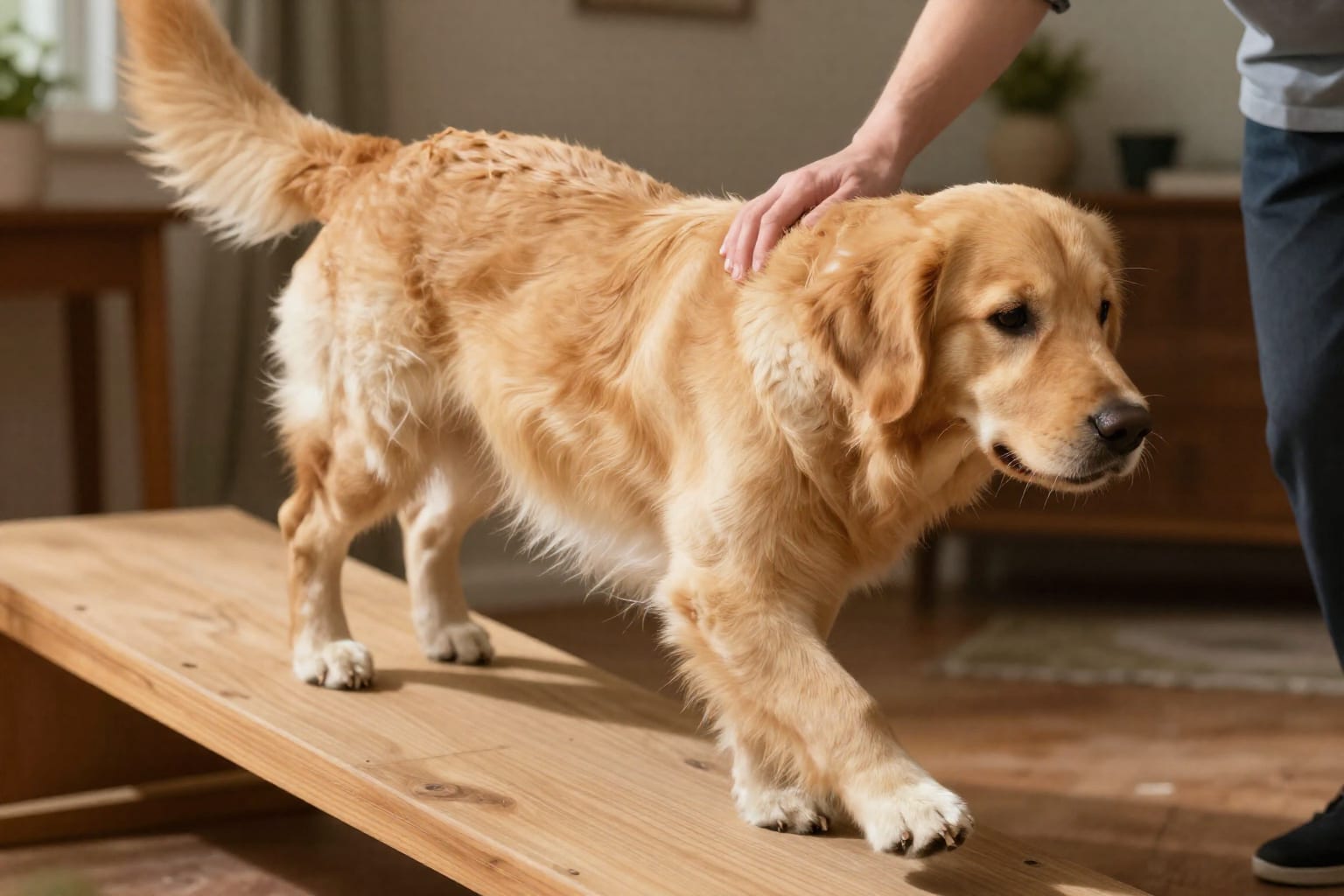
The cheapest, fastest win is changing your dog’s daily terrain. Start with flooring. Throw rugs with non-slip backing (or yoga mats cut to size) along your dog’s most-used paths—from the bed to the water bowl, from the living room to the back door. I laid down a runner of interlocking foam tiles in my hallway, and Gus stopped doing the splits every time he turned a corner. Next, ramps. For steps steeper than about 18 inches (like a porch or a bed), a ramp with a 15- to 20-degree angle and a textured surface beats lifting your dog every time. Measure the height of the step, then buy a ramp at least three times that length—short ramps are too steep for a dog with weak back legs. Finally, bedding. An orthopedic foam bed with a low-profile edge (so your dog can step onto it, not climb over a bolster) reduces joint pressure. I swapped Gus’s old donut bed for a flat, memory-foam mat, and he stopped circling endlessly before lying down. These changes cost under $50 total and took one afternoon. Prioritize the places your dog spends 90 percent of its time.
2. Invest in a Properly Fitted Mobility Harness or Sling
A standard walking harness won’t cut it for a dog that needs help standing or balancing. You need a dedicated mobility harness with a sturdy handle over the back (for front-end support) or a rear-support sling that wraps under the belly and lifts the hindquarters. I use a rear-support sling with a padded neoprene strap for Gus on his daily walks. It took me three tries to get the fit right: the strap should sit snugly just in front of the back legs, not pressing on the bladder or spine. If it’s too loose, it rides up and chafes; too tight, and it restricts breathing. For dogs that struggle to rise from lying down, a full-body harness with a handle over the shoulders lets you lift the front end without straining your own back. A good test: put the harness on your dog, gently lift the handle, and see if your dog’s feet stay flat on the ground. If they dangle, the harness is too high or poorly positioned. Use the sling only when your dog is actively walking—don’t leave it on while resting, as it can rub sores. I keep our sling hanging by the back door so I grab it automatically every time we head out.
3. Consider Joint Supplements and Anti-Inflammatory Diets (With Vet Guidance)
Supplements are not a magic bullet, but the right ones can dial down inflammation and slow cartilage breakdown. The three with the strongest evidence are glucosamine hydrochloride (usually combined with chondroitin), omega-3 fatty acids from fish oil, and green-lipped mussel powder. I started Gus on a veterinary-grade omega-3 oil (at a dose based on his weight) and a glucosamine-chew. After about six weeks, I noticed he was less stiff after napping. But here’s the catch: supplements only work if your dog’s diet isn’t actively fueling inflammation. That means cutting out high-carb, low-quality kibble and adding lean protein, vegetables like green beans or pumpkin, and healthy fats like coconut oil in moderation. I switched Gus to a balanced, low-glycemic diet recommended by my vet (a mix of high-quality commercial food and steamed veggies), and his energy improved noticeably. However, I cannot stress enough: talk to your vet before starting any supplement. Some can interact with medications (like NSAIDs or blood thinners), and dosing matters—more is not better. Also, supplements can take 4–8 weeks to show effect, so be patient and track changes with a simple journal.
4. Use a Cart or Wheelchair for Non-Weight-Bearing Breaks
A dog wheelchair is not a sign of defeat—it’s a tool for freedom. Gus’s hind legs were still functional, but after a long walk he’d drag his toes. I borrowed a friend’s cart for a weekend, and it was like watching a different dog. He trotted, he sniffed, he even tried to chase a squirrel (I held him back). The key is timing: a wheelchair is appropriate when your dog can no longer bear weight on the affected leg(s) for more than a few steps without collapsing, or when dragging causes sores on the paws or knuckles. Measure your dog carefully—back length from shoulder to hip, height from floor to elbow, and width across the hips—and follow the manufacturer’s sizing guide. Acclimate your dog slowly: let them sniff the cart, then support them in it for 5 minutes indoors before going outside. Never leave a dog in a cart unattended, and never use one during an acute injury (like a broken bone or recent surgery) without explicit vet approval. A cart is a break, not a replacement for walking. I now use ours two or three times a week for short, happy outings, and Gus’s mood visibly lifts on cart days.
5. Implement Gentle, Low-Impact Physical Therapy at Home
You don’t need a rehab center to help your dog maintain muscle mass and joint mobility. Start with passive range of motion: while your dog is lying on its side, gently flex and extend each joint (shoulder, elbow, wrist, hip, knee, hock) through its full natural range, holding each position for 2–3 seconds. Do 5–10 repetitions per joint, once or twice a day. I do this with Gus while he’s relaxing after dinner, and he often falls asleep mid-session. Next, wobble cushion work: place a small inflatable disc or folded towel under your dog’s front (or back) paws and encourage them to shift weight. This builds core stability without high impact. Finally, short leash walks on soft surfaces like grass or dirt paths. Keep walks to 5–10 minutes, two to three times a day, and watch for signs of fatigue—panting, slowing down, or a stiff gait afterward. If your dog seems sore the next day, reduce duration or increase rest days. Always get a green light from your vet or a canine rehab professional before starting any new exercises, especially if your dog has a specific diagnosis like hip dysplasia or a spinal condition.
6. Schedule Regular Vet Checkups and Pain Management Reviews
A mobility-impaired dog’s needs change over weeks, not months. I now take Gus for a checkup every three months instead of once a year. At each visit, my vet checks his joint range of motion, palpates for pain, and reviews his current pain medication (he’s on a low-dose NSAID plus a joint supplement). We also discuss whether to add adjunctive therapies like laser therapy (which uses cold laser light to reduce inflammation) or acupuncture (which can release endorphins and improve circulation). Laser therapy, in particular, has made a noticeable difference for Gus—after a session, he walks more fluidly for about 48 hours. The cost is $40–60 per session, and many vets offer packages. The most important thing is to never let your dog suffer in silence. If your dog is limping, crying out, or reluctant to move, call your vet immediately. Pain management is not optional; it’s a cornerstone of quality of life. And if your current vet isn’t proactive about mobility, consider a second opinion or a vet who specializes in senior or orthopedic care.
7. Adapt Your Daily Routine and Expectation (Mental Health Matters)
The hardest part of supporting a dog with mobility problems is accepting that your old life is over. Gus used to power-walk three miles a day. Now, we do two 10-minute loops around the block, and sometimes we stop every 50 feet so he can sniff a bush. I used to get frustrated—come on, let’s go—but I’ve learned that his pace is his pace. I now carry a small pouch of treats and use them to encourage him to walk a few extra steps, then reward. Mental stimulation matters just as much as physical movement. I hide kibble in a snuffle mat, freeze pumpkin in a Kong, and practice simple tricks like “touch” or “paw” that don’t require moving far. These activities keep his brain engaged and reduce anxiety. And I’ve started using a daily checklist: Did he eat? Did he move comfortably? Did he seem happy? If two of those are “no,” it’s time to call the vet. There’s no shame in slowing down—your dog doesn’t care about mileage. They care about being with you. When I finally stopped rushing Gus, our walks became quieter, more connected, and honestly, more precious. That shift in my own mindset was the biggest support I could offer.
Frequently Asked Questions About Dog Mobility Problems
What is the first thing I should do if my dog suddenly can't walk?
Stay calm. Do not force your dog to stand. Contact your veterinarian or an emergency vet immediately. Sudden mobility loss can indicate a stroke, disc injury, or other urgent medical issue.
Can I use a baby sling or towel to support my dog's back legs?
A homemade towel sling is fine for very short-term use—like getting from the car to the vet—but a properly fitted rear-support sling or harness is better for longer walks to avoid chafing or pressure on the spine.
How do I know if my dog needs a wheelchair or just a harness?
If your dog can still bear some weight on both hind legs but tires quickly, a harness may be enough. If the back legs frequently collapse or drag, a wheelchair is likely more appropriate. Consult your vet.
Are joint supplements a guaranteed cure for arthritis in dogs?
No supplement can cure arthritis. They may reduce inflammation and slow progression, but they work best combined with weight management, exercise modification, and pain medication if needed.
How often should I take my mobility-impaired dog for walks?
Short, frequent walks—5 to 10 minutes, two to three times a day—are usually better than one long walk. Watch for signs of fatigue, and always stop before your dog is exhausted or limping.
Final practical takeaway: Start with the environment—it’s cheap and immediate. Then layer in gear, nutrition, therapy, and vet oversight one step at a time. Your dog doesn’t need perfection; they need consistency and your patience. Worth bookmarking before your next vet visit.